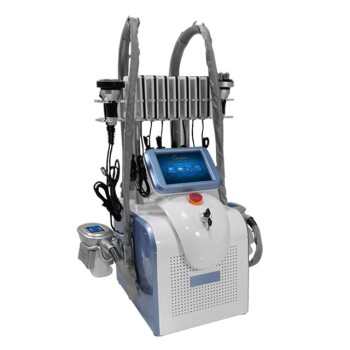
Fat cavitation works effectively on almost any area of the body that possesses a localized fat deposit of at least 3 centimeters in depth. While the most common treatment zones are the stomach, thighs, flanks, and upper arms, the procedure is generally applicable wherever there is sufficient tissue density to safely absorb the ultrasonic energy.
Core Takeaway The eligibility of a body part for fat cavitation is determined by fat depth, not just location. To ensure safety and efficacy, the treatment area must have a subcutaneous fat layer thicker than 3cm to allow the ultrasound waves to target fat cells without impacting bone or organs.
Common Treatment Zones
Because cavitation is designed to target "stubborn" fat that resists diet and exercise, it is most frequently applied to areas where the body naturally stores energy reserves.
The Abdominal Region
The stomach is the most frequently treated area.
Providers can target both the upper and lower stomach to address protruding bellies or post-pregnancy pouches.
Flanks and Hips
This includes the area widely known as "love handles."
Treating the flanks helps contour the waistline, while targeting the hips can smooth out the silhouette between the waist and thighs.
The Thighs and Buttocks
Cavitation is effective for the lower body, specifically the inner and outer thighs.
It is also commonly used on the buttocks (bum) to reduce localized fat deposits and assist with contouring.
Upper Body Areas
The upper arms are a prime candidate for treatment to reduce "bat wings" or loose tissue.
Some practitioners also treat the back, targeting bra bulges or other localized fat deposits below the neck.
The Critical Requirement: Depth of Fat
To understand why these areas are chosen, you must look beyond the anatomy and look at the tissue composition.
The 3cm Rule
The primary limitation for any treatment area is the amount of fat present.
You typically need more than 3 centimeters of pinchable fat in the target area.
Safety and Physics
If there is insufficient fat, the ultrasonic waves could penetrate too deeply.
This depth requirement protects underlying structures and ensures the energy is focused solely on disrupting adipose (fat) tissue.
Areas to Avoid and Limitations
Knowing where not to treat is just as important as knowing where you can.
Bony Prominences
Cavitation cannot be performed on bony parts of the body.
Areas lacking sufficient fatty tissue, such as the shins, ankles, or collarbones, do not provide the necessary buffer for the ultrasound waves.
The Head and Neck
You must never attempt fat cavitation on the head or neck.
These areas contain critical vascular and neural structures and lack the required fat density for safe operation.
General Weight Loss
This procedure is for contouring, not massive weight reduction.
It is not a solution for treating the entire body simultaneously or for managing obesity; it is strictly for localized deposits.
Assessing Your Candidacy
Before scheduling a session, assess your specific goals against the technical limitations of the device.
- If your primary focus is Stomach or Thighs: Ensure you can pinch at least an inch (approx. 3cm) of fat in the specific area you want to treat to ensure safety.
- If your primary focus is Contouring: This treatment is ideal for "stubborn" pockets of fat (like love handles) that have not shifted despite a healthy lifestyle.
- If your primary focus is Weight Loss: Recognize that cavitation reduces volume in specific spots, but it will not significantly lower the number on the scale.
Fat cavitation is a precision tool for sculpting specific zones, provided those zones offer enough depth to work safely.
Summary Table:
| Treatment Area | Suitability | Key Benefit |
|---|---|---|
| Abdomen | Highly Recommended | Targets stubborn upper/lower stomach fat and post-pregnancy pouches |
| Flanks/Hips | Highly Recommended | Contours the waistline and reduces 'love handles' |
| Thighs/Buttocks | Recommended | Smoothes inner/outer thighs and reduces localized deposits on the bum |
| Upper Arms | Recommended | Effectively treats 'bat wings' and loose fatty tissue |
| Back | Recommended | Eliminates bra bulges and localized fat below the neck |
| Bony Areas | Not Suitable | Safety risk; insufficient fat depth to buffer ultrasonic waves |
| Head/Neck | Strictly Prohibited | High risk to critical vascular and neural structures |
Elevate Your Clinic’s Body Contouring Results with BELIS
Are you looking to provide your clients with the ultimate non-invasive fat reduction experience? BELIS specializes in professional-grade medical aesthetic equipment designed exclusively for premium salons and clinics. Our advanced RF Cavitation and Body Sculpting solutions deliver the precision and safety needed to target stubborn fat in the abdomen, thighs, and arms with clinical efficiency.
From state-of-the-art laser systems (Diode, CO2, Nd:YAG) to specialized care devices like skin testers and HIFU, our portfolio empowers your business to achieve superior patient outcomes. Partner with BELIS today to access industry-leading technology and expert support.
Contact Us to Upgrade Your Equipment
Related Products
- Cryolipolysis Cavitation Machine Fat Cavitation Machine
- Cryolipolysis Fat Freezing Machine and Ultrasonic Cavitation Device
- Cryolipolysis Fat Freezing Cavitation Lipo Laser Machine
- Cryolipolysis Fat Freezing Machine Cavitation Lipo Laser Machine
- Cryolipolysis Fat Freezing Machine Ultrasonic Cavitation Fat Reducing Device
People Also Ask
- Do home fat cavitation machines work? The Truth About At-Home Body Contouring
- What lifestyle practices should be adopted to achieve optimal results from fat cavitation? Maximize Your Body Contouring
- What are the technical advantages of using lower temperatures and shorter durations in cryolipolysis fat reduction?
- What anatomical factors determine whether a patient with submental fullness should be treated with cryolipolysis fat-reduction devices versus energy-based skin tightening modalities?
- Why is an immediate manual massage necessary after completing a session with a cryolipolysis fat-reduction device? Boost Efficacy by Up to 30%