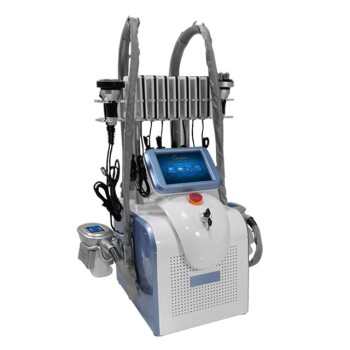
Paradoxical Adipose Hyperplasia (PAH) is an unintended and counterintuitive reaction to cryolipolysis (fat freezing) where the treated area develops more fat cells rather than fewer. Instead of the cold temperature destroying the fat cells to be naturally eliminated, it triggers them to enlarge and proliferate. This results in a distinct, firm bulge or lump at the treatment site, often mirroring the shape of the applicator.
Core Takeaway PAH is a lasting cosmetic complication where fat cells expand rather than shrink in response to cooling. It typically appears months after the procedure and, unlike normal swelling, will not resolve without surgical intervention.
The Mechanism of Reaction
From Reduction to Expansion
Cryolipolysis is designed to freeze fat cells, causing them to die and be metabolized by the body.
In cases of PAH, the biological response is inverted. The fat cells react to the extreme cold by growing larger and increasing in number.
The Physical Manifestation
This reaction creates a visible mass in the treated area.
Because the growth occurs strictly within the treatment zone, the bulge often retains the exact footprint of the device applicator used during the session.
Timing and Frequency
A Delayed Onset
PAH is not immediately apparent after the procedure.
Patients typically notice the issue roughly six months post-treatment. It is distinct from the temporary inflammation or swelling that occurs right after the session.
Unpredictability of Occurrence
Current medical understanding makes it difficult to predict which patients will develop PAH.
It is considered a rare event, though statistics vary. Older data suggested an incidence rate of 1 in 20,000, while more recent studies indicate it may be as common as 1 in 2,000.
Understanding the Trade-offs: Treatment Challenges
Permanence Without Intervention
A critical misconception is that PAH will fade over time like typical post-procedure swelling.
PAH does not resolve on its own. The enlarged fat cells are permanent unless physically removed.
Complexity of Correction
Treating PAH is more complex than treating standard weight gain.
The fat tissue resulting from PAH is often denser and more fibrous than original fat tissue.
While liposuction or abdominoplasty (tummy tuck) are the required solutions, the increased density of the fat can sometimes make standard liposuction less successful.
Making the Right Choice for Your Goals
There is no way to completely eliminate the risk of PAH with cryolipolysis, but understanding the signs allows for faster management.
- If your primary focus is risk assessment: Recognize that while statistically rare (potentially 1 in 2,000), the complication requires invasive surgery to correct, negating the "non-invasive" benefit of the original procedure.
- If your primary focus is post-procedure recovery: Monitor the treatment site for firm, growing masses three to six months after treatment; if a bulge persists or grows, consult a plastic surgeon rather than waiting for it to shrink.
Knowledge is your safety net; recognizing that a hardening bulge is a medical complication, not a diet failure, ensures you seek the right corrective treatment immediately.
Summary Table:
| Feature | Normal Cryolipolysis Response | Paradoxical Adipose Hyperplasia (PAH) |
|---|---|---|
| Fat Cell Impact | Cells freeze, die, and are metabolized | Cells enlarge and proliferate |
| Visible Result | Gradual reduction in fat volume | Firm bulge mirroring the applicator shape |
| Onset Timing | Improvement seen in 1-3 months | Mass appears roughly 6 months post-treatment |
| Resolution | Natural elimination by the body | Permanent; requires surgery (Liposuction/Tummy Tuck) |
| Incidence Rate | Standard expected outcome | Estimated between 1 in 2,000 to 1 in 20,000 |
Elevate Your Clinic’s Safety and Results with BELIS Professional Equipment
At BELIS, we understand that patient safety and predictable outcomes are the foundation of your success. As a specialist in professional-grade medical aesthetic equipment, we provide premium clinics and salons with advanced technology designed for precision.
Our comprehensive portfolio includes:
- Body Sculpting: High-performance Cryolipolysis, EMSlim, and RF Cavitation systems.
- Advanced Lasers: Diode Hair Removal, CO2 Fractional, Nd:YAG, and Pico lasers.
- Specialized Care: HIFU, Microneedle RF, Hydrafacial systems, and high-tech skin testers.
Whether you are looking to manage risks through better technology or expand your service menu with the latest body contouring solutions, BELIS is your trusted partner. Contact us today to discover how our professional systems can enhance your treatment efficacy and build lasting trust with your elite clientele.
Related Products
- Cryolipolysis Fat Freezing Machine Ultrasonic Cavitation Fat Reducing Device
- Cryolipolysis Fat Freezing Machine and Ultrasonic Cavitation Device
- Cryolipolysis Fat Freezing Cavitation Lipo Laser Machine
- Cryolipolysis Fat Freezing Machine with Cavitation and Laser Lipolysis
- Cryolipolysis Fat Freezing Machine Cavitation Lipo Laser Machine
People Also Ask
- What are the main benefits of using a fat freezing machine? Achieve Permanent, Non-Surgical Body Sculpting
- Do fat freezing machines really work? Achieve Non-Invasive Body Contouring
- What are the potential side effects and risks associated with fat freezing? Safety Profile & Rare Risks Explained
- What is the treatment principle of cryolipolysis fat freezing? Science-Backed Fat Reduction and Body Contouring
- What are the technical advantages of using lower temperatures and shorter durations in cryolipolysis fat reduction?