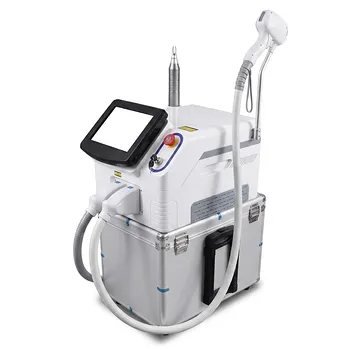
Medical laser hair removal is used after male facial surgery to correct displaced hair—not to erase the scar itself. When a facelift or related procedure moves hair-bearing skin onto the tragus, preauricular region, helix, or temporal area, diode or Nd:YAG laser treatment can reduce those unwanted follicles. This helps the scar remain visually discreet and restores a more natural hairline and ear contour.
The central purpose is optical camouflage: carefully reducing hair in surgically relocated skin can prevent the incision from becoming conspicuous, but it must be performed only after adequate healing and under specialist supervision.
How Surgery Creates Hairline and Scar-Visibility Problems
Hair-bearing skin may be repositioned
Facial lifting and reconstructive procedures reposition skin to achieve tension-free closure and a natural contour. As a result, hair-bearing areas can be moved into locations where hair would not normally grow, such as directly in front of the ear, at the base of the helix, or across the tragus.
This can make an otherwise well-designed incision visually noticeable. The issue is not necessarily the scar’s texture; it is the contrast between the scar, surrounding skin, and hair growing in an anatomically unexpected location.
Temporal hairlines can become irregular
Skin suspension may shift the temporal hairline, creating an uneven edge or an isolated patch of hair. A small area of misplaced hair can be more noticeable than a longer, well-camouflaged incision.
Laser hair reduction can help refine the transition between the remaining hairline and the surgically repositioned skin.
How Laser Hair Removal Conceals the Surgical Result
It removes hair from relocated tragal skin
A retro-tragal incision is placed behind or around the tragus to reduce visible scarring from the front. If the procedure redirects hair-bearing skin over the tragus, however, hair may emerge from an unnatural position.
A professional laser hair removal system can selectively target those follicles, creating a cleaner and more anatomically plausible tragal surface without placing a new visible incision in front of the ear.
It corrects hair in preauricular and helix regions
Unwanted hair may also appear in the preauricular area or near the base of the helix after skin advancement or suspension. Precision treatment in these small regions can eliminate visual inconsistencies that shaving or plucking would only temporarily manage.
The goal is localized hair reduction, not indiscriminate removal of all facial or temporal hair.
It supports natural hairline design
Hairline management requires preserving hair where it contributes to a natural appearance and reducing it where surgery has placed it unnaturally. Treatment is therefore planned around the desired boundary rather than applied as a uniform field.
This is particularly important in male patients, whose temporal and sideburn patterns strongly influence whether a surgical result appears natural.
Which Laser Technology Is Typically Used?
Diode lasers
Diode systems are commonly used for long-term reduction of unwanted hair through selective photothermolysis. They target melanin in the hair shaft and follicle, producing thermal injury to follicular structures during suitable growth phases.
Treatment response depends on hair color, skin type, follicle depth, and device parameters. Darker, coarser hair generally responds more predictably than light, gray, or very fine hair.
Nd:YAG lasers
Long-pulsed Nd:YAG systems may be selected for some darker skin types because their longer wavelength can reduce epidermal melanin absorption relative to shorter-wavelength systems. The appropriate device and settings must be chosen by a clinician experienced with the patient’s skin type and postoperative tissue.
The term Nd:YAG should not be confused with every type of Q-switched laser. Q-switched devices are primarily associated with pigment and tattoo applications, whereas hair removal typically relies on appropriately configured long-pulsed systems.
Selective photothermolysis
The underlying principle is selective photothermolysis: light energy is absorbed preferentially by pigment in the hair and converted into heat. The objective is to damage the follicle while limiting injury to surrounding skin.
This mechanism does not directly flatten, erase, or remodel a mature surgical scar. It improves camouflage by correcting the hair pattern around the scar.
When Treatment Is Considered After Surgery
The incision must be adequately healed
Laser hair removal should not be performed over an open wound, unstable closure, active infection, significant crusting, or immature tissue unless the operating clinician specifically determines that treatment is appropriate.
Postoperative timing varies with the procedure, healing progress, skin type, and location. The surgeon and laser clinician should coordinate the treatment plan rather than relying on a fixed timetable.
Hair-growth cycles require multiple sessions
Laser treatment is most effective when follicles are in susceptible growth phases. Because follicles cycle asynchronously, several sessions are usually required for meaningful long-term reduction.
This is why laser treatment is a strategic postoperative correction rather than an immediate one-time solution.
Interim methods should be conservative
Before the area is ready for laser treatment, patients should follow the surgeon’s instructions for managing visible hair. Aggressive plucking, waxing, or manipulation can irritate healing tissue and interfere with follicle targeting.
Shaving may sometimes be permitted, but only when the wound is sufficiently healed and the clinician approves it.
How This Differs From Direct Scar Treatment
Hair removal is a camouflage procedure
Laser hair removal addresses misplaced or excessive hair near the incision. It does not replace treatments intended for raised, widened, pigmented, or otherwise symptomatic scars.
Scar-specific management may involve silicone therapy, pressure strategies, corticosteroid or 5-fluorouracil injections, or other laser modalities, depending on the scar’s characteristics and the clinician’s assessment.
Scar and hair management may be combined
A patient may need two parallel treatment plans: one for scar quality and another for hair positioning. These treatments should not automatically be performed during the same appointment because postoperative tissue has limited tolerance for heat, friction, and inflammation.
The sequencing should be individualized, particularly around the tragus, helix, and temporal hairline.
Understanding the Trade-offs
The result is reduction, not guaranteed permanent removal
Professional laser treatment generally provides long-term hair reduction, but follicular regrowth can occur. Hormonal factors, hair characteristics, and the number of completed sessions affect durability.
Patients should not assume that one treatment will permanently eliminate every visible hair.
Skin and hair contrast affects effectiveness
Laser hair removal works best when the follicle contains sufficient pigment. Gray, white, blond, and very fine hairs may respond poorly because they absorb less laser energy.
In those cases, the clinician may discuss alternative approaches, such as carefully selected electrolysis, once the tissue has fully healed.
Postoperative skin has increased risk
Recently operated skin may be more reactive to heat and more vulnerable to pigmentary changes, prolonged redness, burns, or delayed healing. Conservative settings, test spots, eye protection, and appropriate clinical assessment are essential.
Treatment should be postponed if the area is inflamed, infected, unusually tender, or not fully closed.
Excessive removal can create a new asymmetry
Removing too much hair from the temporal region or sideburn can make the result look less natural. Hairline management should preserve a deliberate transition and account for future aging and changes in hairstyle.
The objective is not simply to create a hair-free area; it is to restore believable anatomy.
Hair removal does not prevent every healing complication
Removing hair may reduce an aesthetic inconsistency and can limit irritation from hairs in an abnormal location. However, it should not be presented as a guaranteed method for preventing infection, ulceration, delayed closure, or abnormal scar formation.
Those risks require standard wound care, medical monitoring, and treatment of the scar itself when indicated.
How to Apply This to a Treatment Plan
The most reliable approach is coordinated planning between the operating surgeon and a qualified medical laser practitioner.
- If your primary focus is hiding a retro-tragal or preauricular scar: Ask whether postoperative hair-bearing skin has been redirected over the incision and whether localized diode or Nd:YAG hair reduction is appropriate after healing.
- If your primary focus is correcting an uneven temporal hairline: Define the desired hairline conservatively before treatment so that unwanted hair is reduced without creating a new asymmetry.
- If your primary focus is improving scar texture or color: Pursue a separate scar-management assessment, because hair removal will not directly remodel the scar.
- If your primary focus is safety after surgery: Wait for explicit clearance, disclose all medications and skin treatments, and avoid laser exposure over incompletely healed or inflamed tissue.
Used at the right stage and with careful anatomical planning, medical laser hair removal can make displaced postoperative hair far less noticeable and help preserve the natural appearance of male facial surgery.
Summary Table:
| Aspect | Key Points |
|---|---|
| Purpose | Correct misplaced hair for optical camouflage, not scar removal |
| Common Areas | Tragus, preauricular area, helix, temporal hairline |
| Technologies | Diode and long-pulsed Nd:YAG lasers |
| Mechanism | Selective photothermolysis targets melanin in hair follicles |
| Timing | Only after adequate healing; multiple sessions required |
| Candidates | Best for dark, coarse hair; poor for light or fine hair |
| Risks | Postoperative skin reactivity, pigment changes, asymmetry if over-treated |
| Distinction | Does not replace scar-specific treatments (e.g., silicone, injections) |
Elevate your practice with BELIS's premium laser platforms, including diode and Nd:YAG systems, engineered for precision and safety. Whether you're a clinic or premium salon, our advanced technology empowers you to deliver superior post-surgical hairline corrections and aesthetic outcomes. Partner with us for reliable supply, OEM/ODM support, and global certifications. Discover how BELIS can enhance your service portfolio and boost patient satisfaction—reach out to our specialists today to schedule a consultation or request a demo. Contact us now to take the next step!
Related Products
- Diode Laser SHR Trilaser Hair Removal Machine for Clinic Use
- Clinic Diode Laser Hair Removal Machine with SHR and Trilaser Technology
- Tri Laser Diode Hair Removal Machine Professional Beauty Equipment
- Trilaser Diode Hair Removal Machine for Beauty Clinic Use
- 808nm Diode Laser Hair Removal Machine 755+808+1064nm Mixed Wavelength Professional Equipment
People Also Ask
- What is the working mechanism of professional-grade Diode laser equipment? Master the Physics of Selective Photothermolysis
- What are the characteristics of the Diode laser for hair removal? The Gold Standard for Deep Efficacy and Skin Safety
- What are the technical advantages of using industrial-grade Diode lasers? Superior Precision for Professional Clinics
- What advancements have occurred in laser hair removal machine technology? Trends Shaping Modern Aesthetic Clinics
- How long does a single laser hair removal session take? Fast & Effective Treatments for Your Busy Schedule