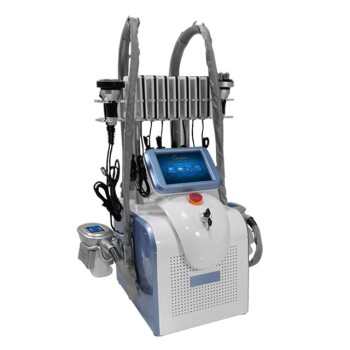
Cryolipolysis and radiofrequency lipolysis represent two opposing thermal approaches to the same goal: non-invasive fat reduction. While Cryolipolysis utilizes controlled cooling to freeze and eliminate fat cells, radiofrequency lipolysis employs radio waves to generate heat that kills the targeted fat cells. Both methods allow patients to reduce body mass index (BMI) and abdominal circumference without the incisions or anesthesia required by surgical options.
Key Takeaway The choice between these two methods is primarily a choice between heat and cold. Radiofrequency lipolysis matches the non-invasive nature of Cryolipolysis but distinguishes itself by using heat to reduce fat and BMI, often offering quicker treatment sessions and shorter recovery times.
The Mechanisms of Action
Cryolipolysis: The Cold Approach
Cryolipolysis functions by exposing fat cells to extremely low temperatures. This process freezes the cells, leading to their eventual elimination by the body.
It is strictly non-invasive, meaning it does not require the anesthesia or surgical incisions associated with traditional liposuction.
Radiofrequency Lipolysis: The Heat Approach
In contrast, radiofrequency lipolysis uses radio waves to target fat deposits. This energy creates heat which effectively kills fat cells.
Clinical studies indicate this method is effective not only for spot reduction but also for reducing overall body mass index (BMI) and abdominal circumference.
Operational Differences and Efficiency
Treatment Speed and Recovery
While both treatments are non-invasive, the workflow differs. Slimming machines utilizing radiofrequency or ultrasound technologies often provide quicker individual treatment sessions compared to the longer cycles required for Cryolipolysis.
Furthermore, radiofrequency treatments are frequently associated with shorter recovery times, allowing patients to return to normal activities almost immediately.
Comparison to Surgical Alternatives
To understand the value of these non-invasive options, it helps to view them against surgical counterparts. Liposuction requires anesthesia, incisions, and a suction device, with full results taking several months to manifest.
Conversely, non-invasive methods like Cryolipolysis and radiofrequency lipolysis avoid the risks of surgery and the potential nerve injury risks associated with injection lipolysis.
Understanding the Trade-offs
Results vs. Time Investment
While radiofrequency sessions may be faster, achieving the desired result might require a different number of sessions compared to Cryolipolysis.
Patients must weigh the convenience of shorter appointments against the total treatment plan recommended by their provider.
The Limits of Non-Invasive Care
Neither Cryolipolysis nor radiofrequency lipolysis physically extracts fat during the appointment in the way liposuction does.
Results are biological and gradual. For example, Cryolipolysis results typically begin to appear after a few weeks, whereas surgical swelling can mask liposuction results for months.
Making the Right Choice for Your Goal
When deciding between these thermal reduction methods, consider your specific constraints regarding time and comfort.
- If your primary focus is time efficiency: Radiofrequency lipolysis is likely the better choice, as it generally offers quicker treatment sessions and shorter recovery periods.
- If your primary focus is proven BMI reduction: Radiofrequency lipolysis has specific clinical backing for reducing body mass index and abdominal circumference.
- If your primary focus is avoiding anesthesia: Both Cryolipolysis and radiofrequency lipolysis are excellent choices, as neither requires the sedation or local anesthetic injections needed for liposuction.
Ultimately, both methods offer effective fat reduction without surgery, leaving the decision to your preference for heat versus cold and your schedule availability.
Summary Table:
| Feature | Cryolipolysis (Cooling) | Radiofrequency Lipolysis (Heating) |
|---|---|---|
| Mechanism | Controlled cooling to freeze fat cells | Radio waves to generate heat and kill fat cells |
| Primary Goal | Targeted fat reduction (spot treatment) | Fat reduction and BMI/circumference reduction |
| Session Duration | Longer (typically 35-60 mins) | Shorter, more time-efficient |
| Recovery Time | Minimal | Very short/Immediate |
| Invasiveness | Non-invasive (No incisions/anesthesia) | Non-invasive (No incisions/anesthesia) |
| Key Benefit | Precise targeting of stubborn fat | Faster sessions and potential skin tightening |
Elevate Your Clinic with BELIS Professional Body Sculpting Solutions
Are you looking to offer your clients the latest in non-invasive fat reduction? BELIS specializes in professional-grade medical aesthetic equipment designed exclusively for clinics and premium salons. Whether you choose the cooling precision of Cryolipolysis or the thermal efficiency of RF Cavitation and EMSlim, our advanced systems deliver the clinical results your business needs.
Our extensive portfolio also includes:
- Advanced Laser Systems: Diode Hair Removal, CO2 Fractional, Nd:YAG, and Pico lasers.
- Body & Face Contouring: HIFU, Microneedle RF, and Cryolipolysis.
- Specialized Care: Hydrafacial systems, skin testers, and hair growth machines.
Partner with BELIS to bring world-class technology to your practice. Contact us today to discuss your equipment needs!
Related Products
- Cryolipolysis Fat Freezing Machine Ultrasonic Cavitation Fat Reducing Device
- Cryolipolysis Fat Freezing Machine and Ultrasonic Cavitation Device
- Cryolipolysis Fat Freezing Cavitation Lipo Laser Machine
- Cryolipolysis Fat Freezing Machine with Cavitation and Laser Lipolysis
- Cryolipolysis Fat Freezing Machine Cavitation Lipo Laser Machine
People Also Ask
- What are the main benefits of using a fat freezing machine? Achieve Permanent, Non-Surgical Body Sculpting
- Do fat freezing machines really work? Achieve Non-Invasive Body Contouring
- What are the potential side effects and risks associated with fat freezing? Safety Profile & Rare Risks Explained
- What is the treatment principle of cryolipolysis fat freezing? Science-Backed Fat Reduction and Body Contouring
- What are the technical advantages of using lower temperatures and shorter durations in cryolipolysis fat reduction?