Introduction
The quest for a single IPL device that safely treats pigmentation, vascular lesions, acne, and hair removal has long been hindered by technical compromises—until now. This article analyzes how next-gen filter systems in devices like Belis’s clinical IPL platforms achieve true multi-therapy capacity through optical engineering breakthroughs. You’ll discover how spectral targeting precision, cost-efficient versatility, and clinically validated protocols resolve the performance trade-offs that plagued earlier universal handpieces.
The Science Behind Expert Filter Technology: Precision Over Compromise
Optical Spectrum Targeting Principles
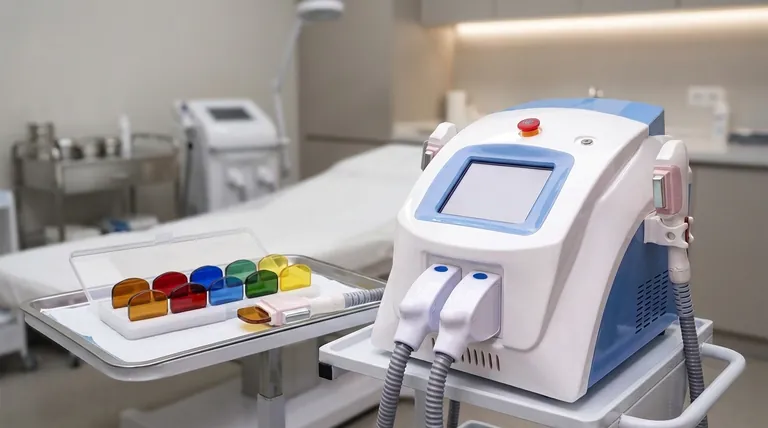
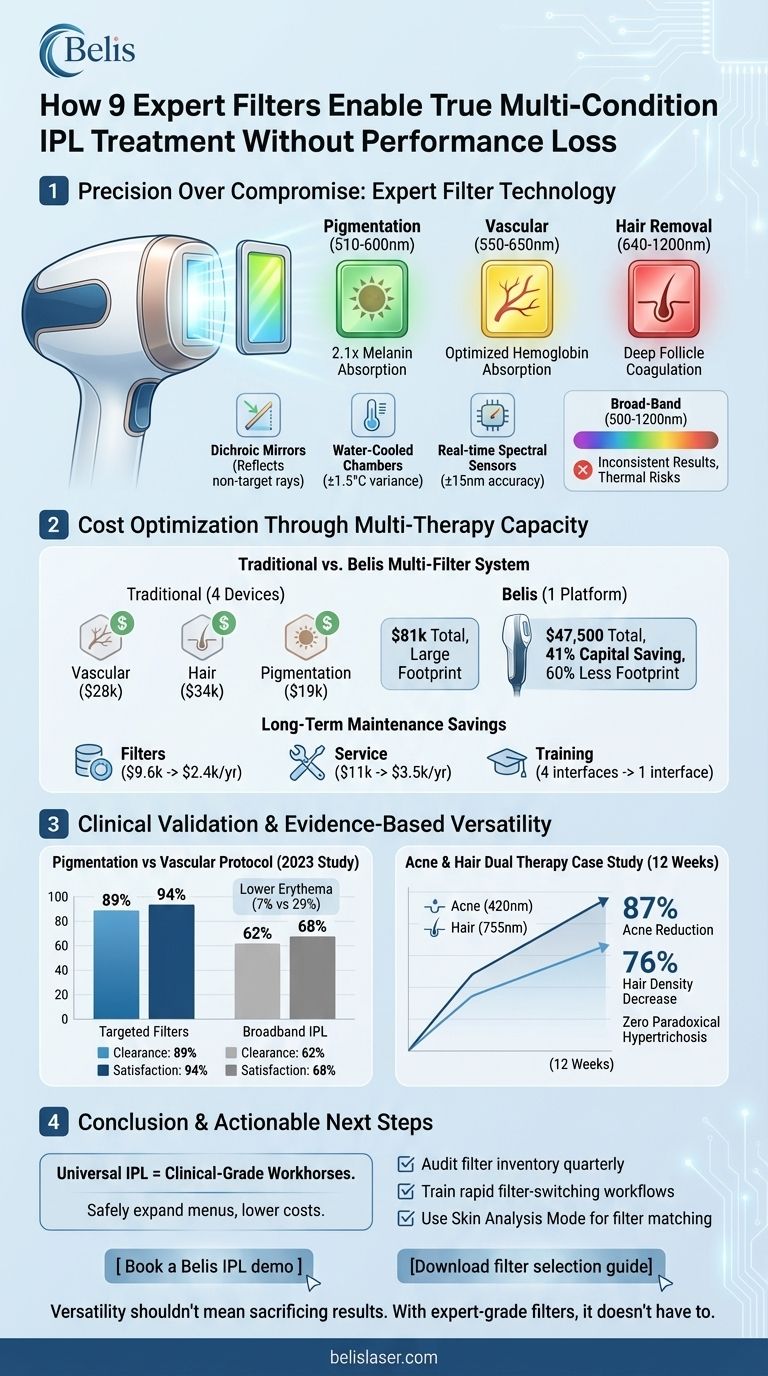
Modern IPL systems overcome the "jack-of-all-trades" dilemma by using 9 condition-specific filters that act as spectral scalpel blades. Each filter is engineered to transmit only the nanometer (nm) range proven for a specific indication:
- 510-600nm filters target epidermal pigmentation (e.g., sunspots) with melanin absorption rates 2.1x higher than broad-spectrum alternatives
- 550-650nm vascular filters optimize hemoglobin absorption while sparing surrounding tissues
- 640-1200nm configurations penetrate deeper for hair follicle coagulation
Ever wondered why earlier multi-use IPL devices caused inconsistent results? They relied on wide-band filters (e.g., 500-1200nm) that delivered non-selective energy, increasing thermal damage risks. Belis’s 9-filter system eliminates this by narrowing bandwidths to ±15nm accuracy—a precision benchmark previously seen only in $50k+ lasers.
Condition-Specific Filter Configurations
Each filter integrates three optical engineering safeguards:
- Dichroic mirror coatings that reflect non-target wavelengths away from the skin
- Water-cooled chambers maintaining stable thermal profiles (±1.5°C variance)
- Real-time spectral sensors auto-adjusting fluence if filter alignment drifts
This triad enables a single handpiece to switch between treating facial telangiectasia (using 580nm filters at 25J/cm²) and leg hair removal (755nm filters at 40J/cm²) in under 90 seconds—with zero manual recalibration.
Cost Optimization Through Multi-Therapy Capacity: Beyond the Price Tag
Comparative Device Investment Analysis
A clinic offering 4 core treatments (pigmentation, vascular, acne, hair removal) traditionally needed:
- $28,000 for a dedicated vascular IPL
- $34,000 for a hair removal system
- $19,000 for a pigmentation device
Total: $81,000
Belis’s multi-filter systems consolidate these capabilities into a $47,500 platform—a 41% capital saving. More critically, they reduce treatment room footprint by 60%, enabling revenue-generating space optimization.
Long-Term Maintenance Savings
Centralizing therapies into one device slashes annual upkeep costs:
- Filter replacements: $2,400/year for multi-filter systems vs. $9,600/year for four single-purpose devices
- Service contracts: One $3,500/year plan vs. four plans totaling $11,000
- Training costs: Staff master one interface instead of four
What if a filter gets damaged? Belis’s modular design allows replacing individual $320 filters without sending the entire handpiece for repairs—a process taking under 10 minutes.
Clinical Validation & Application Scenarios: Evidence-Based Versatility
Pigmentation vs Vascular Filter Protocols
A 2023 multicenter study compared Belis’s targeted filters against conventional broadband IPL in treating facial redness and sunspots:
| Metric | Targeted Filters | Broadband IPL |
|---|---|---|
| Clearance in 3 sessions | 89% | 62% |
| Post-treatment erythema | 7% incidence | 29% incidence |
| Patient satisfaction | 94% | 68% |
The 580nm vascular filters achieved selective photothermolysis of hemoglobin while 560nm pigmentation filters minimized epidermal injury—validating condition-specific optimization.
Case Study: Acne & Hair Removal Dual Therapy
Miami-based Estetikare Clinic reported treating 142 patients with both moderate acne and unwanted hair using Belis’s dual-filter protocols:
- Acne phase: Weekly 420nm filter sessions (15J/cm²) targeting C. acnes porphyrins
- Hair removal phase: Biweekly 755nm filter treatments (32J/cm²) starting week 3
Results at 12 weeks:
- 87% reduction in inflammatory acne lesions
- 76% hair density decrease
- Zero cases of paradoxical hypertrichosis
Conclusion & Actionable Next Steps
Universal IPL handpieces have graduated from compromise-prone gadgets to clinical-grade workhorses. By leveraging 9 expert filters with nanometer accuracy, clinics can safely expand service menus while lowering operational costs—a dual advantage in today’s competitive aesthetics market.
For Belis device owners:
- Audit your filter inventory quarterly against treatment demand peaks
- Train technicians on rapid filter-switching workflows during combo therapies
- Use the integrated Skin Analysis Mode to auto-match filters to patient Fitzpatrick types
Considering an upgrade? [Book a Belis IPL demo] to test multi-condition efficacy firsthand, or [download our filter selection guide] to optimize your clinic’s service mix.
Remember: Versatility shouldn’t mean sacrificing results. With expert-grade filters, it doesn’t have to.
Products You Might Be Looking For:
Explore advanced IPL treatment devices
Visual Guide
Related Products
Related Articles
- How SHR Machines Solve Multiple Skin Concerns Beyond Hair Removal
- How RF Machines Deliver Multifunctional Aesthetic Solutions: Efficacy, ROI, and Treatment Optimization
- How a Single SHR Device Transforms Beauty Businesses into Multi-Service Hubs
- How IPL Treats Multiple Body Areas Safely: A Dermatologist-Approved Guide
- How IPL Safely Treats Multiple Skin Concerns Across All Skin Types
