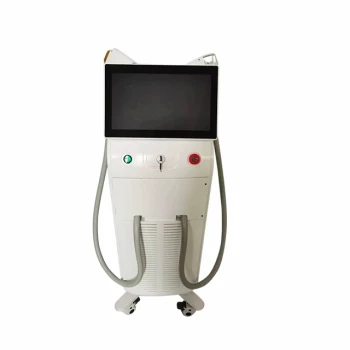
Cut-off filters in IPL equipment allow operators to customize the light spectrum by blocking shorter, high-energy wavelengths that are aggressively absorbed by the skin's surface pigment. By inserting a specific filter—such as 615 nm, 645 nm, or 695 nm—the system eliminates the part of the broad spectrum most likely to heat epidermal melanin. This selective filtration protects the skin surface while ensuring enough energy reaches the deeper hair follicle for effective treatment.
Core Takeaway: The primary function of a cut-off filter is safety through exclusion. By removing shorter wavelengths that interact too strongly with epidermal melanin, these filters maximize the "optical contrast" between the skin and the hair, significantly reducing the risk of surface burns on darker skin tones.
The Mechanism of Spectral Filtering
Modifying the Broad Spectrum
Intense Pulsed Light (IPL) utilizes a flashlamp that emits a broad spectrum of light.
Without modification, this spectrum contains short wavelengths that carry high energy. These wavelengths are highly effective but non-selective.
Cut-off filters act as a gatekeeper. They block all light below a specific wavelength number while allowing longer, deeper-penetrating wavelengths to pass through.
Reducing Melanin Absorption
Melanin, the pigment that gives skin and hair its color, absorbs light energy and converts it to heat.
Shorter wavelengths are most strongly absorbed by melanin. In patients with darker skin, the epidermis contains a high concentration of melanin.
If shorter wavelengths are not filtered out, the skin surface absorbs too much energy too quickly. This leads to surface heating rather than follicle heating.
Adjusting for Skin Type (Fitzpatrick Scale)
Protecting Darker Skin Tones
For patients with darker skin (higher Fitzpatrick types), the risk of side effects is elevated due to higher epidermal melanin content.
To treat these patients safely, operators use higher cut-off filters (e.g., 695 nm).
This eliminates a larger portion of the "dangerous" spectrum. It forces the system to rely on longer wavelengths, which penetrate deeper and are less absorbed by the surface skin.
Maximizing Contrast
The goal of IPL is to heat the target (hair) without heating the surroundings (skin).
Using the correct cut-off filter improves this contrast.
On lighter skin, a lower cut-off (e.g., 615 nm) allows more total energy to be delivered, as there is less surface melanin to protect. On darker skin, a higher cut-off sacrifices total spectrum width to prioritize surface safety.
Understanding the Trade-offs
Filters Are Only One Variable
While cut-off filters are essential for spectral safety, they are not a standalone solution.
You cannot rely on filters alone to prevent complications.
According to standard safety protocols, you must also adjust pulse width (duration of the flash) and energy density (fluence). A proper filter combined with the wrong pulse width can still cause injury.
The Risk of Over-Filtering
Using a high cut-off filter (like 695 nm) makes the treatment safer for the skin, but it also reduces the total amount of light energy available.
If you filter out too much of the spectrum on a patient with light skin and fine hair, the treatment may become ineffective.
Preventing Adverse Effects
The ultimate goal of using these filters is to avoid specific complications caused by overheating the epidermis.
Proper filtration mitigates the risk of erythema (redness), blistering, and hyperpigmentation.
These side effects occur when the "thermal relaxation time" of the skin is violated by energy that is too intense or of the wrong wavelength.
Making the Right Choice for Your Goal
When operating IPL equipment, selecting the correct cut-off filter is a balance between aggression (efficacy) and protection (safety).
- If your primary focus is treating lighter skin (Fitzpatrick I-III): Use a lower cut-off filter (e.g., 615 nm) to utilize a broader spectrum and maximize energy absorption for effective removal of varying hair thicknesses.
- If your primary focus is treating darker skin (Fitzpatrick IV-V): Use a higher cut-off filter (e.g., 695 nm) to strictly eliminate high-absorption wavelengths, prioritizing the preservation of the epidermis over raw energy output.
Correctly matching the cut-off filter to the patient's melanin levels is the single most effective hardware adjustment for preventing surface burns.
Summary Table:
| Filter Wavelength | Target Skin Type (Fitzpatrick) | Primary Function | Clinical Benefit |
|---|---|---|---|
| Lower (e.g., 615nm) | Type I - III (Light) | Maximizes spectrum width | High efficacy for fine/light hair |
| Medium (e.g., 645nm) | Type III - IV (Medium) | Balances energy & safety | Versatile for various hair textures |
| Higher (e.g., 695nm) | Type IV - V (Dark) | Blocks high-energy short waves | Minimizes surface burns & PIH |
Elevate Your Clinic's Standards with BELIS Technology
Precision matters in medical aesthetics. BELIS provides premium clinics and high-end salons with professional-grade equipment designed for safety and superior results. From advanced IPL and Diode Laser Hair Removal systems to Pico lasers, HIFU, and EMSlim body sculpting, our technology ensures your clients receive the best care possible.
Ready to upgrade your practice with industry-leading laser systems?
Contact our experts today to find the perfect solution for your business.
References
- Richard J. Ort, Christine Dierickx. Laser hair removal. DOI: 10.1053/sder.2002.33282
This article is also based on technical information from Belislaser Knowledge Base .
Related Products
- Clinic Use IPL and SHR Hair Removal Machine with Nd Yag Laser Tattoo Removal
- IPL SHR Hair Removal Machine for Permanent Hair Removal
- IPL SHR+Radio frecuency machine
- Diode Tri Laser Hair Removal Machine for Clinic Use
- Diode Laser SHR Trilaser Hair Removal Machine for Clinic Use
People Also Ask
- Why is SPF 50 mandatory after IPL for vascular lesions? Protect Your Skin and Ensure Flawless Results
- What are the negative effects of IPL? Understanding Risks for Safe Treatment
- Why is the use of specialized eye protection mandatory during facial laser or IPL hair removal? Protect Your Vision
- Does IPL work on all hair types? The Truth About Melanin & Hair Removal Success
- What are the operational advantages of some IPL/SHR systems? Maximize Clinic Throughput & ROI with Advanced Speed