The Conversation in the Chair
A client sits in your chair, anxious but hopeful. They've seen dramatic before-and-after photos online, read about miracle cures, and are now looking to you for a definitive solution to their hair loss.
This is the most critical moment in the client relationship. It's where the pervasive psychology of hope collides with the unexciting reality of biology. The desire for a cure is powerful, but the most valuable service a professional can offer is not a miracle—it's clarity.
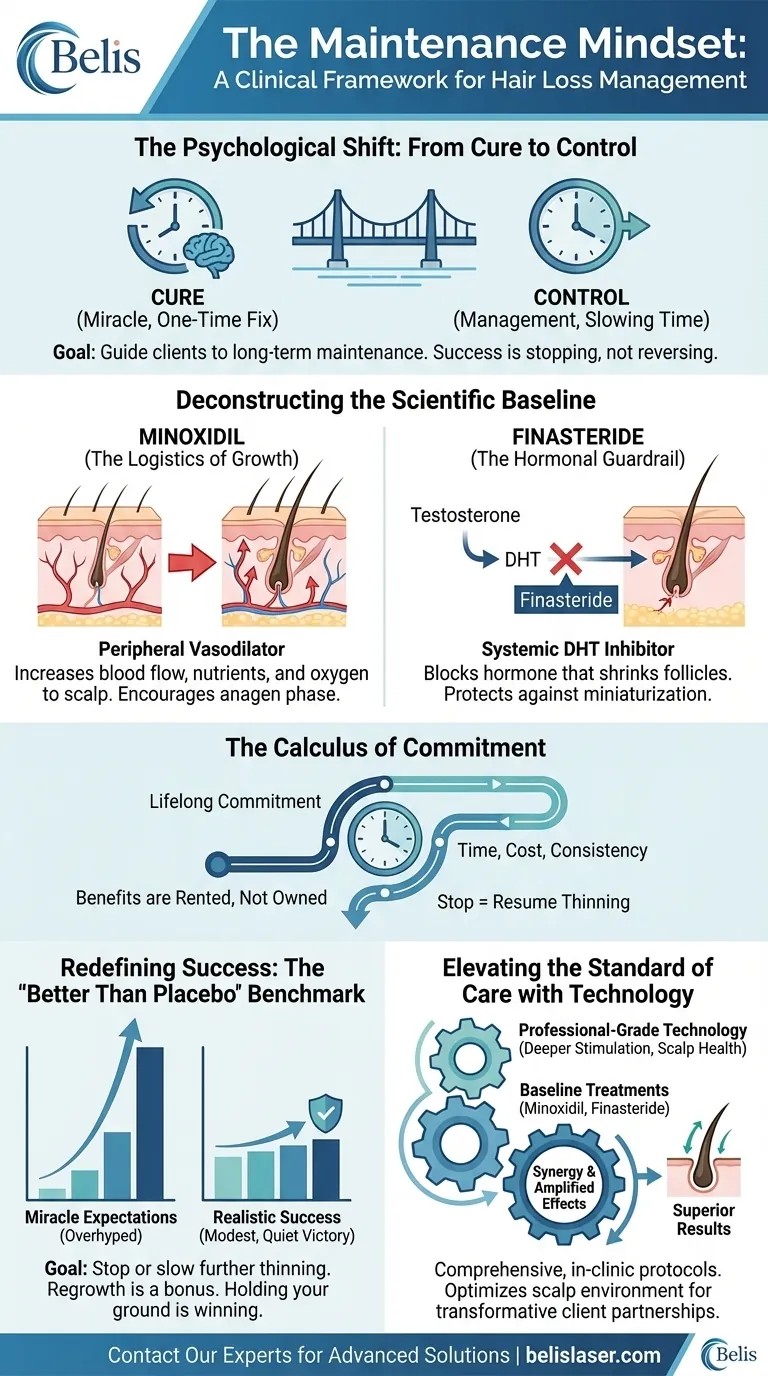
The Psychological Hurdle: From Cure to Control
The fundamental misunderstanding about hair loss treatment is semantic. People seek a "cure," a one-time fix that restores what was lost and prevents future problems.
But for common androgenetic alopecia, no such cure exists.
The scientifically accurate goal is management. It’s a paradigm shift from a short-term restoration project to a long-term maintenance plan. Your first job is to guide your client across this psychological bridge. Success isn't about reversing time; it's about skillfully slowing it down.
Deconstructing the Scientific Baseline
To build trust, the conversation must be anchored in established science. For decades, the foundation of hair loss management has rested on two well-researched molecules: Minoxidil and Finasteride. They don't create new follicles, but they can awaken dormant ones and protect those under threat.
Minoxidil: The Logistics of Growth
Minoxidil is a peripheral vasodilator. In simple terms, it widens the blood vessels in the scalp where it's applied.
This isn't magic; it's logistics.
By increasing blood flow, it enhances the delivery of oxygen and nutrients to the hair follicle. This improved supply chain can coax follicles from the resting (telogen) phase into the growth (anagen) phase and keep them there longer. It's an environmental upgrade for the scalp.
Finasteride: The Hormonal Guardrail
Finasteride operates on a different, more systemic level. It inhibits the conversion of testosterone to dihydrotestosterone (DHT), the primary hormone responsible for shrinking hair follicles in genetically susceptible individuals.
Think of it as a hormonal bodyguard. It doesn't stimulate new growth directly but intercepts the primary antagonist, protecting follicles from further miniaturization.
The Calculus of Commitment
These baseline treatments work. They are significantly better than a placebo. But "working" comes with an unglamorous set of terms and conditions that every client must understand and accept.
Time, Cost, and Consistency
The effect of these treatments is entirely dependent on their continued use. Stopping the treatment means the biological processes they hold at bay will resume.
This is a lifelong commitment of time, discipline, and money. The benefits are rented, not owned. Any regrown or maintained hair is on loan, and the lease is renewed with every application or pill.
Redefining Success: The "Better Than Placebo" Benchmark
The results are almost always modest. The goal is to stop or slow further thinning. Any regrowth is a bonus.
Clients must be calibrated to see a "noticeable but not dramatic" improvement as a major victory. In a world of overhyped marketing, the quiet success of maintenance can feel underwhelming. But in the context of a progressive condition, holding your ground is winning.
| Method | Mechanism of Action | The Core Trade-Off |
|---|---|---|
| Minoxidil | Improves blood flow and nutrient delivery to follicle | Requires perpetual, consistent topical application. |
| Finasteride | Reduces the follicle-shrinking hormone DHT | A long-term systemic commitment, prescription only. |
Elevating the Standard of Care with Technology
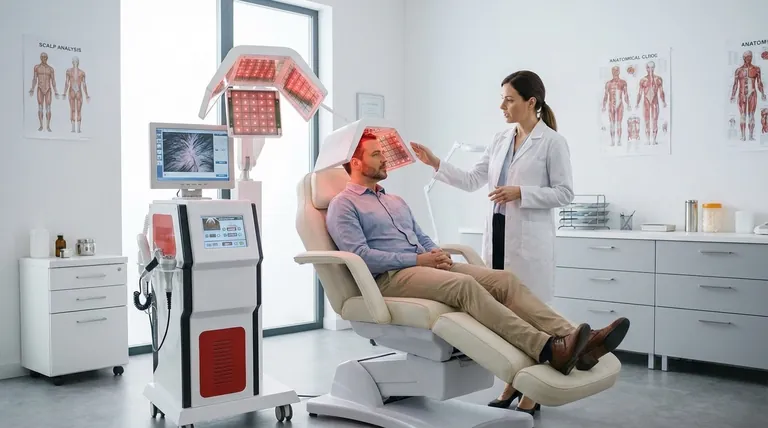
Once a client understands this baseline—that success is about consistent, long-term management—you can introduce a higher standard of care. This is where professional-grade technology creates a crucial advantage.
While foundational treatments like minoxidil work on the surface, advanced aesthetic equipment allows you to address scalp health and follicular stimulation on a deeper, more profound level. Technologies that enhance circulation, improve cellular metabolism, and optimize the scalp environment can work in synergy with baseline treatments, potentially amplifying their effects and improving overall outcomes.
This moves the service from simply recommending a product to providing a comprehensive, in-clinic treatment protocol. It allows you to offer a more robust, multi-faceted strategy that clients cannot replicate at home. For clinics and salons aiming to be leaders in aesthetic care, providing these advanced, science-backed solutions is what separates a basic consultation from a truly transformative client partnership.
To equip your practice with the advanced technology needed to lead these conversations and deliver superior results, Contact Our Experts.
Visual Guide