
In short, yes, radio frequency cavitation is considered a safe and non-invasive procedure for body contouring when performed by a qualified professional. The technology is designed to be non-surgical, requiring no anesthesia and involving minimal downtime. Most side effects are mild and temporary, resolving within a day.
The safety of any radio frequency cavitation treatment depends almost entirely on the skill of the operator and the suitability of the candidate. While the technology itself is low-risk, improper technique or treating an individual with health contraindications is where potential problems arise.

Deconstructing the "Radio Frequency Cavitation" Treatment
To properly assess safety, it's important to understand that "radio frequency cavitation" typically refers to a two-stage process using two different technologies.
The Role of Ultrasonic Cavitation
Ultrasonic cavitation is the first step, designed for fat reduction. It uses low-frequency ultrasound waves to create microscopic bubbles within the fluid surrounding your fat cells.
These bubbles rapidly expand and collapse, creating a pressure wave that causes the fat cells to rupture and release their contents (triglycerides) into your bloodstream. Your body then processes this waste naturally.
The Role of Radio Frequency (RF)
Radio frequency is the second step, focused on skin tightening. This technology uses radio wave energy to create a controlled heating effect deep within the skin's dermal layer.
This deep heat accomplishes two things: it causes existing collagen fibers to contract for an immediate tightening effect, and it stimulates the production of new collagen and elastin over time for longer-term skin firming. This is crucial for tightening the skin after the volume of fat has been reduced by cavitation.
A Breakdown of the Safety Profile
The procedure is designed to target fat cells and collagen without harming surrounding tissues, making its safety profile very favorable.
Common and Expected Side Effects
You should expect some minor, temporary side effects as your body responds to the treatment. These are normal signs that the procedure is working.
The most common effects include mild redness, a feeling of warmth in the treated area, and minor swelling. As noted in clinical observations, these typically resolve within a few hours to a day. Some people also report increased thirst, which is a natural part of the process.
Your Body's Natural Clearing Process
After cavitation ruptures the fat cells, the released triglycerides are transported by your lymphatic and vascular systems to the liver. The liver metabolizes them, treating them just like any other fat you would consume in your diet.
This is why proper hydration is critical both before and after treatment. Drinking plenty of water helps your lymphatic system and liver efficiently flush out the processed waste material.
Understanding the Real Risks and How to Avoid Them
While the procedure is overwhelmingly safe, risks—though rare—do exist. They are almost always avoidable and are linked to practitioner error or poor client screening.
The Risk of Burns
The most significant but rare risk is a burn. This is not caused by the cavitation process but by the radio frequency (RF) portion of the treatment.
A burn occurs if the RF handpiece is held in one spot for too long, the energy level is set too high for your skin type, or there is insufficient conductive gel on the skin. A skilled, attentive technician will keep the handpiece in constant motion to ensure even heat distribution, virtually eliminating this risk.
Ineffective Results
While not a safety issue, the risk of poor or nonexistent results is a primary concern. This often happens when the treatment is performed on a non-ideal candidate or when expectations are unrealistic.
These treatments work best for individuals who are already close to their target weight but have stubborn, localized pockets of fat that are resistant to diet and exercise. It is a body contouring tool, not a weight loss solution.
Contraindications: Who Must Avoid This Treatment
The most important safety step is a thorough consultation to screen for contraindications. You should not undergo this procedure if you have any of the following conditions:
- Pregnancy or breastfeeding
- Liver or kidney disease
- Heart conditions or a pacemaker
- Metal implants (such as plates, screws, or IUDs) in the treatment area
- Active cancer or are undergoing chemotherapy
- Epilepsy
- Skin infections, open wounds, or severe inflammation in the target area
Making the Right Choice for Your Goal
Your approach to selecting a provider and preparing for the treatment is the most important factor in your safety.
- If your primary focus is maximum safety: Prioritize a provider with medical credentials in a dermatology or plastic surgery clinic and verify their specific training on the device being used.
- If your primary focus is achieving the best results: Ensure you have a thorough consultation to confirm you are a good candidate and discuss realistic outcomes for your specific body concerns.
- If your primary focus is avoiding side effects: Follow all pre- and post-treatment instructions meticulously, especially regarding hydration, to support your body's natural clearing process.
By understanding the technology and carefully vetting your provider, you can confidently navigate your treatment and achieve your body contouring goals safely.
Summary Table:
| Aspect | Safety Profile |
|---|---|
| Procedure Type | Non-invasive, non-surgical |
| Common Side Effects | Mild redness, warmth, swelling (resolves within hours/day) |
| Primary Risk | Burns from improper RF technique (rare with skilled operator) |
| Key Contraindications | Pregnancy, heart/liver/kidney disease, metal implants in area |
Achieve Safe and Effective Body Contouring with BELIS
Maximize your clients' safety and satisfaction with professional-grade medical aesthetic equipment from BELIS. Our advanced radio frequency cavitation machines are engineered for precise, controlled treatments, helping medical aesthetics clinics and premium beauty salons deliver outstanding, non-invasive results.
Contact our experts today to discover the right equipment for your practice and enhance your service offerings.
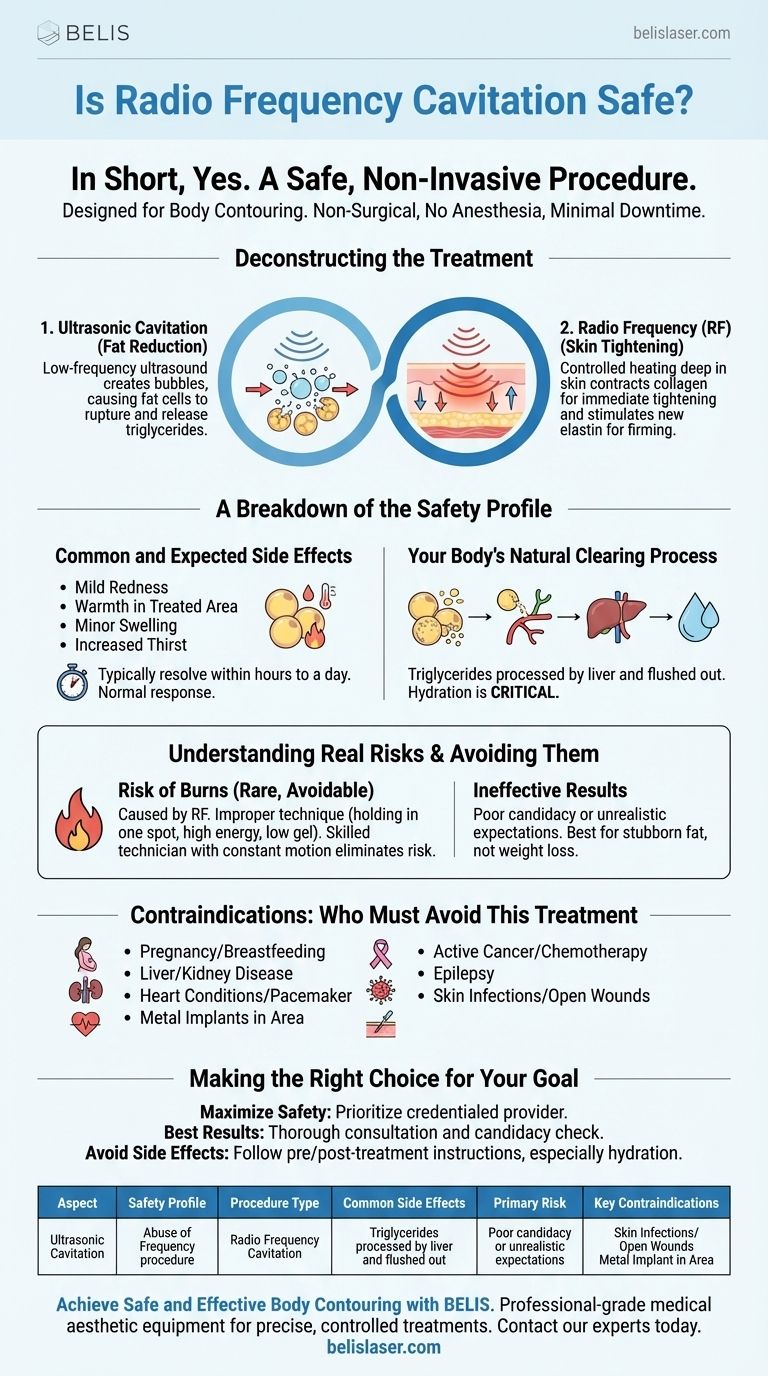
Visual Guide
Related Products
- Ultrasonic Cavitation Radiofrecuency Machine for Body Slimming
- Cryolipolysis Fat Freezing Machine and Ultrasonic Cavitation Device
- Cryolipolysis Fat Freezing Machine Cavitation Lipo Laser Machine
- Cryolipolysis Fat Freezing Machine Ultrasonic Cavitation Fat Reducing Device
- Cryolipolysis Fat Freezing Cavitation Lipo Laser Machine
People Also Ask
- What are the pros and cons of the ultrasonic cavitation slimming treatment? A Guide to Painless Body Contouring
- Does an ultrasonic cavitation machine also tighten the skin? Achieve Total Body Contouring with RF Synergy
- How does radiofrequency technology in slimming machines promote fat reduction? The Science of Non-Invasive Sculpting
- How should one prepare for an ultrasonic cavitation appointment? 5 Essential Tips for Maximum Fat Loss Results
- What areas of the body are targeted for ultrasonic cavitation? Best Zones for Effective Body Contouring











